

Home Renovation vs New Build
You’ve outgrown your home. The kitchen is cramped, the bathrooms outdated, and you need more space. Now you face one of the biggest financial decisions of your life: Should you invest $150,000-$300,000 renovating your current home, or tear it down and build new from scratch?
This decision affects not just your budget, but your lifestyle for the next decade. According to 2026 construction data, major renovations average $150-$250 per square foot, while new construction runs $200-$400 per square foot. But cost is only one factor in this complex equation involving zoning, emotions, neighborhood dynamics, and long-term value.
In this comprehensive guide, we’ll compare every aspect of new construction versus renovation—costs, timelines, pros and cons, hidden factors, and decision frameworks. By the end, you’ll have a clear roadmap for making the choice that’s right for your family, budget, and future. Let’s explore both paths and determine which leads to your dream home.
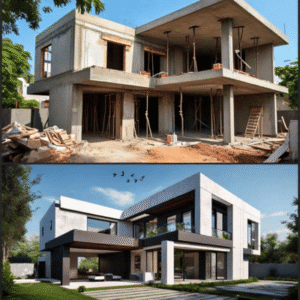
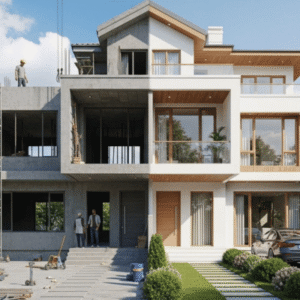
Renovation vs new Construction pros and cons
Answer these questions honestly. Count your YES answers in each category:
BUILD NEW IF 5+ YES:
1. Your home has major structural issues (foundation, framing, roof)
2. You want to completely change the floor plan/layout
3. You need to add 50%+ more square footage
4. Current home has outdated systems (electrical, plumbing, HVAC)
5. You want modern energy efficiency and smart home technology
6. Neighborhood property values support new construction
7. You’re willing to relocate for 6-12 months during construction
8. You want everything exactly how you envision it
RENOVATE IF 5+ YES:
1. Your home’s structure and systems are fundamentally sound
2. You love your neighborhood/location and don’t want to move
3. Home has character/historical value you want to preserve
4. You need less than 30% more square footage
5. Your budget is under $200,000
6. You can live through 3-6 months of construction disruption
7. Local zoning makes new construction difficult/expensive
8. You want to complete project in phases over time
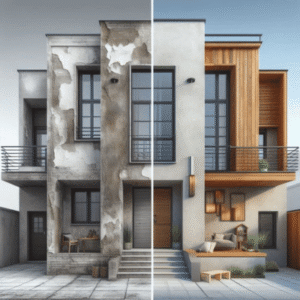
Timeline Comparison: How Long Each Takes
| Phase | Major Renovation | New Construction |
| Planning/Design | 4-8 weeks | 8-16 weeks |
| Permits | 2-6 weeks | 4-12 weeks |
| Demolition | 1-2 weeks | 3-5 days |
| Foundation | 0-4 weeks (if needed) | 3-6 weeks |
| Framing | 4-8 weeks | 6-12 weeks |
| Mechanicals | 4-6 weeks | 6-10 weeks |
| Interior Finish | 8-12 weeks | 10-16 weeks |
| Final Details | 2-4 weeks | 3-6 weeks |
| Inspections | Ongoing | Ongoing |
| TOTAL TIME | 6-12 months | 9-18 months |
Major Renovation: Complete Pros and Cons Analysis
PROS of Major Renovation:
- Lower Total Cost: Typically 20-40% less expensive than new construction when existing structure is sound
- Keep Your Location: Stay in neighborhood you love, maintain school districts, preserve community connections
- Preserve Character: Maintain historic details, original craftsmanship, unique architectural elements
- Shorter Timeline: Generally 3-6 months faster than new construction from start to finish
- Less Waste: More environmentally friendly by reusing existing structure and materials
- Phased Approach: Can complete project in stages if budget is tight, spreading costs over time
- Lower Property Taxes: Renovations typically trigger smaller tax increases than new construction
- Avoid Relocation: May be able to live in home during construction (though disruptive)
- Proven Foundation: Existing foundation already settled, fewer unknowns about soil conditions
- Faster Permitting: Often simpler permit process than new construction in many jurisdictions
CONS of Major Renovation:
- Hidden Problems: Discovering asbestos, mold, structural issues, outdated systems adds 15-30% to budget
- Design Limitations: Existing structure constrains floor plan options, may not achieve ideal layout
- Living Disruption: Noise, dust, no kitchen/bathrooms for months causes significant family stress
- System Compromises: Integrating new with old (HVAC, plumbing, electrical) creates inefficiencies
- Matching Challenges: Finding materials to match existing finishes can be difficult and expensive
- Code Compliance: Updating to current building codes may require extensive additional work
- Hidden Costs: Never know true costs until walls are opened and problems discovered
- Energy Efficiency Limits: Can’t achieve same efficiency as new construction without extensive envelope work
- Ongoing Issues: Old systems may fail shortly after renovation, requiring additional repairs
- Resale Concerns: Some buyers prefer entirely new homes over renovated older ones
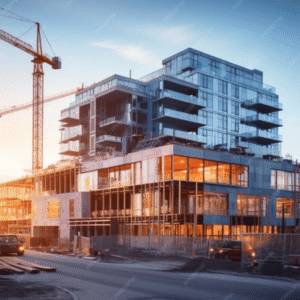
New Construction: Complete Pros and Cons Analysis
PROS of New Construction:
- Complete Control: Design exactly what you want with no structural limitations or compromises
- Modern Efficiency: Latest energy codes, superior insulation, efficient systems reduce utility costs 40-60%
- New Everything: All systems, materials, appliances brand new with full warranties (typically 10+ years)
- Current Codes: Built to latest safety, energy, and accessibility standards from day one
- Smart Home Integration: Modern technology infrastructure built in from scratch, not retrofitted
- Lower Maintenance: New home requires minimal repairs for first 5-10 years, predictable costs
- Customization: Every detail exactly as you want: layout, finishes, features, technology
- No Surprises: Cost estimates more accurate without hidden problem discoveries
- Higher Resale: New homes command premium prices and attract broader buyer pools
- Better Financing: Construction loans often have favorable terms; new homes easier to appraise
CONS of New Construction:
- Higher Cost: 30-60% more expensive than major renovation, requires larger upfront investment
- Longer Timeline: 9-18 months from design to completion, significant time commitment
- Must Relocate: Cannot live in home during teardown/construction, need temporary housing for year+
- Rental Costs: Paying mortgage + rent during construction adds $2,000-$5,000/month to expenses
- Permit Complexity: More extensive permitting process, especially in historic or restricted areas
- Neighborhood Limits: Some areas prohibit teardowns or have strict design requirements
- Property Tax Increase: New construction typically triggers significant property tax reassessment
- Loss of Character: Cannot replicate historic details, original craftsmanship, or unique features
- Environmental Impact: More waste, more new materials, larger carbon footprint than renovation
- Emotional Loss: Tearing down family home where memories were made can be emotionally difficult
7-Step Decision Framework: How to Choose
Use this systematic approach to make the right decision for your specific situation:
Step 1: Assess Structural Integrity
Hire structural engineer to evaluate foundation, framing, roof systems. If major structural work needed (over $75,000), new construction often makes more financial sense. Sound structure favors renovation.
Step 2: Calculate True Space Needs
Need under 500 sq ft additional? Renovation or addition works. Need 1,000+ sq ft? New construction may be more cost-effective. The bigger the change, the more new construction makes sense.
Step 3: Evaluate Systems Age
If roof (20+ years), HVAC (15+ years), electrical panel (30+ years), plumbing (40+ years) all need replacement, that’s $50,000-$100,000 in systems alone. Factor into renovation costs.
Step 4: Research Zoning Restrictions
Some neighborhoods prohibit teardowns, limit heights, require specific architectural styles. Zoning may make decision for you. Check regulations before getting too far in planning.
Step 5: Analyze Neighborhood Values
Don’t over-improve for your neighborhood. If homes sell for $400K, don’t build $700K new home. Check comparable sales to ensure your investment makes financial sense.
Step 6: Consider Timeline Constraints
Need project done in 6 months? Renovation is your only option. Have flexibility and want perfection? New construction offers more control. Your timeline may dictate choice.
Step 7: Calculate All-In Costs
Include temporary housing, storage, moving, rental costs, opportunity costs. Create complete budget for each option with 20% contingency. Choose path that fits your total financial capacity.

When Each Option Makes the Most Sense
Choose Major Renovation When:
- Structure is fundamentally sound (foundation, framing, roof in good condition)
- You love your neighborhood and location is worth preserving at almost any cost
- Home has historical value, unique character, or architectural significance
- You need to add less than 30-40% to current square footage
- Your budget is under $250,000 for 2,000-2,500 sq ft home
- You can tolerate living through 4-8 months of construction disruption
- Zoning or neighborhood restrictions make new construction difficult
- Property taxes would increase dramatically with new construction
- You want to preserve mature landscaping and established yard
- Existing systems (electrical, plumbing, HVAC) are less than 15 years old
Choose New Construction When:
- Home has major structural issues (foundation cracks, settling, framing problems)
- You want to completely redesign floor plan with no limitations
- Need to add 50%+ more square footage to existing home
- All major systems need replacement (roof, HVAC, electrical, plumbing)
- You want maximum energy efficiency and modern building standards
- Renovation costs approach 70%+ of new construction costs
- You’re willing to relocate for 12-18 months during construction
- Neighborhood property values support higher-end new construction
- You want everything customized exactly to your specifications
- Long-term plan is to age in place and want accessibility features built in
Return on Investment: Which Pays Off Better?
Both paths can offer strong returns, but recovery rates differ based on your neighborhood and market conditions:
- Major Renovation ROI: 60-75% cost recovery at resale in most markets. Best ROI when staying under neighborhood price ceiling.
- New Construction ROI: 50-65% cost recovery at resale initially, but new homes hold value better long-term (10+ years).
- Best ROI Scenario – Renovation: Updating 40-year-old home in established, desirable neighborhood where teardowns are rare. Modernizing while preserving character.
- Best ROI Scenario – New: Building in rapidly appreciating neighborhood where old homes are being replaced. New construction sets new price comparables.
- Worst ROI Scenario – Renovation: Over-improving beyond neighborhood norms. $400K renovation in $300K neighborhood loses money.
- Worst ROI Scenario – New: Building $800K new home in neighborhood of $400K homes. Cannot recover premium at resale.
Key Insight: If planning to stay 10+ years, build/renovate for your needs, not resale. If selling within 5 years, match neighborhood standards closely. ROI matters most when moving soon; quality of life matters most when staying long-term.
Frequently Asked Questions: New Construction vs Renovation
Is it cheaper to renovate or build new?
Renovation is typically 20-40% cheaper than new construction IF the existing structure is sound. For a 2,500 sq ft project: renovation averages $375,000-$625,000 vs new construction $500,000-$900,000. However, hidden problems in renovations can close this gap. The cheapest option is the one with fewest surprises.
Can I live in my house during renovation vs new construction?
Major renovations: possibly, but expect 4-8 months of significant disruption (no kitchen/bathrooms, dust, noise). Many families relocate during peak phases. New construction: must relocate entirely for 9-18 months. Factor $2,000-$5,000/month rental costs into new construction budgets.
Which adds more value to my home?
New construction adds more absolute value but may not recover costs in all neighborhoods. Renovations offer better ROI (60-75%) vs new construction (50-65%) in most markets. Best value: match neighborhood price points. Don’t build $700K new in $400K neighborhood.
How do I decide if my home’s structure is worth renovating?
Hire structural engineer ($500-$1,200) to evaluate foundation, framing, roof systems. If repairs exceed $75,000-$100,000 or engineer finds major issues, new construction often better investment. Sound structure with minor issues? Renovation makes sense.
What about permits—which is easier?
Renovation permits are typically simpler and faster (2-6 weeks) but still substantial for major projects. New construction permits more complex (4-12 weeks) requiring full architectural plans, engineering, and more inspections. Some historic neighborhoods effectively prohibit teardowns through restrictive permitting.
Can I do renovation in phases but not new construction?
Yes, major advantage of renovation. Can complete kitchen this year, bathrooms next year, addition year three. Spreads costs over time, though less efficient overall. New construction is all-or-nothing—must complete entire project before occupying.
Which is more environmentally friendly?
Renovation is greener: reuses existing structure, generates less waste, requires fewer new materials. However, new construction achieves far better energy efficiency (40-60% lower utilities), which can offset higher initial environmental impact over 20+ years of ownership.
What if I want to preserve some character but need modern updates?
Renovation is perfect for this. You can maintain historic details, original moldings, unique features while completely modernizing systems and layouts. New construction cannot replicate authentic historic character regardless of budget.