
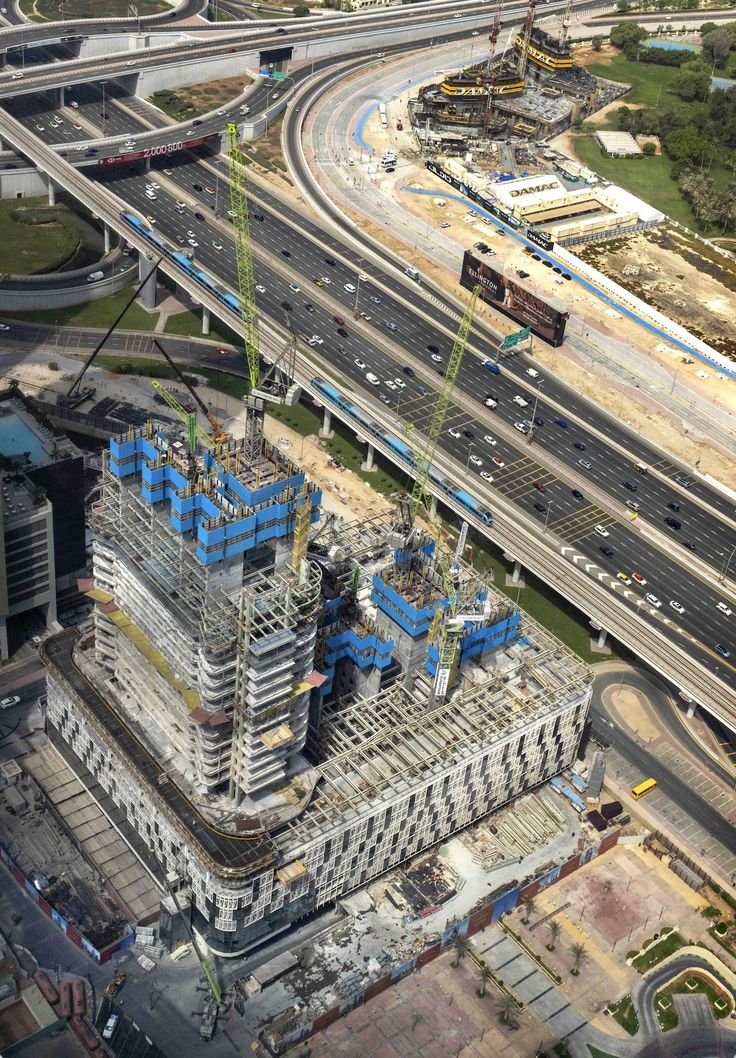
Why Choosing the Right Commercial Construction Company Determines Your Project Success in the Commercial Construction Company Guide 2026
Selecting a commercial construction company for your business building project is one of the most critical decisions you’ll make. Unlike residential construction, commercial projects involve complex building codes, specialized systems, strict deadlines, and significantly higher budgets—often ranging from $500,000 to $10+ million. The right commercial contractor delivers your project on time, on budget, and to exact specifications. The wrong one creates costly delays, budget overruns, and legal nightmares.
According to 2026 industry data, commercial construction projects experience an average 20% cost overrun and 30% timeline delay when contractors lack proper experience or project management capabilities. These failures cost businesses millions in lost revenue, missed opportunities, and emergency remediation. But with proper due diligence and understanding of the commercial construction process, you can avoid these pitfalls entirely.
This comprehensive guide reveals everything business owners and property developers need to know about commercial construction: project types, cost expectations, the construction process, how to select the best commercial building contractor, and critical mistakes to avoid. Whether you’re building retail space, office buildings, warehouses, or mixed-use developments, this guide ensures your project succeeds from groundbreaking to grand opening.
For a comprehensive understanding, refer to the Commercial Construction Company Guide 2026 that outlines essential information for your project.
Types of Commercial Construction Projects
Commercial construction encompasses diverse project types, each with unique requirements, challenges, and specialized expertise needs:
Office Buildings & Corporate Centers
Multi-story office spaces, corporate headquarters, professional buildings. Requirements: Advanced HVAC systems, sophisticated electrical/data infrastructure, elevator systems, parking structures, ADA compliance, energy efficiency standards. Typical cost: $150-$400 per square foot. Timeline: 12-24 months for mid-rise buildings.
Retail & Shopping Centers
Standalone stores, strip malls, shopping centers, big-box retail. Requirements: High-traffic flooring, extensive lighting, specialized HVAC for customer comfort, large open spaces, loading docks, signage infrastructure, storefront systems. Typical cost: $100-$250 per square foot. Timeline: 6-18 months depending on size.
Industrial & Warehouse Facilities
Manufacturing plants, distribution centers, logistics facilities, storage warehouses. Requirements: Heavy-duty concrete floors, high ceilings (30+ feet), loading docks, industrial electrical (three-phase power), specialized ventilation, large clear spans. Typical cost: $50-$150 per square foot. Timeline: 8-16 months.
Hospitality & Restaurants
Hotels, motels, restaurants, bars, entertainment venues. Requirements: Commercial kitchen equipment/ventilation, multiple bathroom facilities, specialized plumbing, fire suppression systems, soundproofing, high aesthetic standards. Typical cost: $200-$500+ per square foot. Timeline: 10-20 months.
Healthcare & Medical Facilities
Clinics, medical offices, dental practices, urgent care centers. Requirements: Specialized HVAC with filtration, medical gas systems, radiation shielding (if applicable), infection control measures, strict code compliance, handicap accessibility. Typical cost: $250-$600+ per square foot. Timeline: 12-24 months.
Mixed-Use Developments
Combined residential/commercial/retail spaces. Requirements: Multiple building codes, separate systems, complex zoning, diverse infrastructure, parking calculations, soundproofing between uses. Typical cost: $150-$400 per square foot. Timeline: 18-36+ months for large projects.
Tenant Improvements (TI)
Customizing existing commercial space for specific tenant needs. Requirements: Working within existing structure, coordinating with building management, maintaining operations, meeting tenant specifications. Typical cost: $50-$200 per square foot. Timeline: 2-6 months.
Ground-Up New Construction
Building on raw land from foundation up. Requirements: Site preparation, utilities connection, full permitting, complete building systems, landscaping, parking. Most complex, highest cost, longest timeline. Typical cost: $100-$500+ per square foot. Timeline: 12-36+ months.
Commercial Construction vs Residential: Key Differences
Understanding how commercial construction differs from residential helps business owners set appropriate expectations:
| Aspect | Commercial Construction | Residential Construction |
| Building Codes | IBC (International Building Code), stricter standards | IRC (International Residential Code), simpler |
| Project Scale | $500K-$50M+, 5,000-500,000+ sq ft | $50K-$2M, 1,000-10,000 sq ft |
| Timeline | 6-36+ months | 2-12 months |
| Materials | Steel, concrete, commercial-grade systems | Wood framing, residential-grade materials |
| Electrical | Three-phase power, complex distribution | Single-phase, simpler systems |
| HVAC | Commercial rooftop units, complex zoning | Residential split systems, simple zones |
| Plumbing | Commercial fixtures, grease traps, backflow prevention | Residential fixtures, standard drainage |
| Permits | More extensive, multiple jurisdictions | Standard residential permits |
| Inspections | Numerous, specialized inspectors | Standard building inspections |
| ADA Compliance | Mandatory accessibility throughout | Limited accessibility requirements |
| Fire Safety | Sprinklers, fire-rated assemblies, emergency systems | Smoke detectors, basic safety |
| Parking | Calculated by use, extensive requirements | Simple driveway/garage |
Critical Distinction: Commercial construction requires contractors with specific commercial experience, licensing, bonding capacity, and expertise. Residential contractors typically cannot handle commercial projects due to licensing restrictions, bonding requirements, and technical complexity. Always verify commercial credentials before hiring.
Commercial Construction Costs: Complete 2026 Breakdown
Commercial construction costs vary dramatically by project type, location, quality level, and complexity. Here’s realistic 2026 pricing for common project types:
| Project Type | Cost per Sq Ft | 10,000 Sq Ft Total | Key Cost Drivers |
| Warehouse/Industrial | $50-$150 | $500K-$1.5M | Steel structure, concrete floors, basic systems |
| Strip Mall/Retail | $100-$250 | $1M-$2.5M | Storefront systems, parking, multiple tenants |
| Office Building | $150-$400 | $1.5M-$4M | HVAC, elevators, parking structure |
| Restaurant | $200-$500 | $2M-$5M | Commercial kitchen, exhaust, plumbing |
| Medical Office | $250-$600 | $2.5M-$6M | Specialized systems, code compliance |
| Hotel/Hospitality | $300-$600 | $3M-$6M | Multiple bathrooms, kitchens, finishes |
| Luxury Retail | $400-$800 | $4M-$8M | High-end finishes, specialized systems |
| High-Rise Office | $400-$1,000+ | $4M-$10M+ | Structural complexity, elevators, MEP |
| Hospital/Healthcare | $500-$1,200+ | $5M-$12M+ | Medical systems, strict codes, equipment |
| Tenant Improvement | $50-$200 | $500K-$2M | Varies by scope and existing conditions |
Typical Cost Allocation:
- Site Work & Foundation: 10-15%
- Structural Frame & Envelope: 20-25%
- Mechanical/Electrical/Plumbing: 25-30%
- Interior Finishes: 15-20%
- Exterior Finishes & Roofing: 8-12%
- General Conditions & Overhead: 10-15%
- Contractor Profit: 8-15%
The Commercial Construction Process: Phase-by-Phase Guide
Commercial construction follows a structured process typically spanning 12-36 months for ground-up projects:
Phase 1: Pre-Construction & Planning (2-6 months)
Needs assessment, budget development, site selection/acquisition, feasibility studies, concept design, architect selection, preliminary designs, cost estimating, financing arrangement, zoning approval, environmental assessments. Critical phase determining project success.
Phase 2: Design Development (3-8 months)
Schematic design, design development, construction documents, engineering (structural, MEP, civil), specification writing, cost refinement, value engineering, permitting applications. Architect and engineers create complete buildable plans.
Phase 3: Bidding & Contractor Selection (1-3 months)
Bid package preparation, contractor prequalification, bid distribution, bid reviews, contractor interviews, reference checks, contract negotiation, subcontractor selection. Choose commercial general contractor and establish contract.
Phase 4: Permitting & Approvals (1-4 months)
Building permit applications, plan reviews, corrections/resubmittals, utility approvals, environmental permits, fire marshal approval, health department (if applicable), final permit issuance. Timeline varies dramatically by jurisdiction.
Phase 5: Site Preparation (1-2 months)
Site clearing, demolition (if applicable), grading and excavation, utility installation/connection, erosion control, temporary facilities, site security. Prepares site for vertical construction.
Phase 6: Foundation & Structure (2-6 months)
Foundation excavation, footings and piers, foundation walls, waterproofing, structural frame (steel or concrete), floor decks, roof structure. Timeline depends on building size and complexity.
Phase 7: Building Envelope (2-4 months)
Exterior walls, window/door installation, roofing system, weatherproofing, exterior finishes. Makes building weather-tight, critical milestone.
Phase 8: Rough-In Systems (3-6 months)
Electrical rough-in, plumbing rough-in, HVAC installation, fire protection systems, low-voltage systems (data, security, AV), elevator installation. Most complex phase with multiple trades coordinating.
Phase 9: Interior Construction (3-6 months)
Insulation, drywall installation, interior framing/partitions, ceiling systems, interior doors, hardware installation. Building takes shape internally.
Phase 10: Finishes & Systems (2-4 months)
Flooring installation, painting, millwork/casework, restroom fixtures, lighting fixtures, HVAC trim-out, electrical trim-out, elevator finishes. Aesthetic and functional completion.
Phase 11: Final Systems & Testing (1-2 months)
Fire alarm testing, sprinkler testing, HVAC balancing, elevator certification, building automation commissioning, emergency systems testing. Ensures all systems functional and code-compliant.
Phase 12: Closeout & Occupancy (1-2 months)
Punch list completion, final inspections, certificate of occupancy, owner training, warranty documentation, as-built drawings, project closeout. Ready for tenant/owner occupancy.
How to Choose the Best Commercial Construction Company
Selecting a commercial contractor requires more rigorous vetting than residential projects due to higher stakes and complexity:
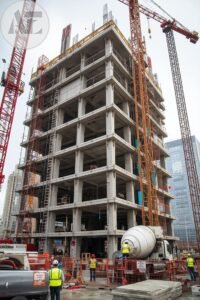
Commercial-Specific Licensing & Bonding
Verify contractor holds commercial general contractor license (different from residential). Confirm bonding capacity matches your project size—bonding companies won’t bond contractors for projects exceeding their financial capacity. Request proof of: commercial general liability ($2M-$5M+), builders risk insurance, professional liability (E&O), umbrella coverage. Small residential contractors often cannot meet commercial bonding/insurance requirements.
Proven Commercial Experience
Require minimum 5+ years commercial construction experience and 10+ completed projects similar to yours. Review portfolio specifically for: your building type (retail, office, industrial, etc.), similar size/budget projects, projects in your region. Visit 2-3 completed projects if possible. Commercial construction differs fundamentally from residential—residential contractors lack necessary expertise regardless of their residential success.
Financial Stability & Capacity
Commercial projects require significant financial resources. Review: Annual revenue (should be 5-10x your project size), years in business (5+ years minimum), bank references, bonding company relationship, Dun & Bradstreet rating if available. Financially unstable contractors may use your project funds to finish other jobs or go bankrupt mid-construction—catastrophic for your business.
Project Management Capability
Commercial projects involve coordinating 20-50+ subcontractors, complex scheduling, and extensive documentation. Evaluate: dedicated project manager assigned to your job, project management software/systems used, communication protocols, progress reporting frequency, change order management process. Ask to see project schedule examples and progress reports from current projects.
Safety Record & OSHA Compliance
Commercial sites have strict safety requirements. Request: EMR (Experience Modification Rate) under 1.0, OSHA 300 logs from past 3 years, written safety program, safety training documentation. Poor safety records indicate liability exposure and potential delays from incidents. Many commercial projects require contractors meet specific safety standards.
References & Past Performance
Require 10+ commercial references including: project owners/developers, architects, subcontractors, lenders/bonding companies. Ask references: Did project finish on time? On budget? Quality meet expectations? How were problems handled? Would you hire again? Payment disputes? Check with Better Business Bureau and state contractor licensing board for complaints.
Local Market Knowledge
Contractors familiar with local building departments, inspectors, subcontractors, and suppliers work more efficiently. Local contractors: know permitting quirks, have inspector relationships, access reliable local subs, understand regional building challenges. Out-of-area contractors face learning curve causing delays.
Technology & Innovation
Modern commercial contractors use: BIM (Building Information Modeling), cloud-based project management (Procore, Buildertrend), digital scheduling software, drone photography for progress, prefabrication when appropriate. Technology improves efficiency, communication, and quality control. Ask contractors about their technology adoption.
10 Critical Mistakes When Hiring a Commercial Building Contractor
- Choosing Based Solely on Lowest Bid – Low bids often indicate inexperience, corner-cutting, or bait-and-switch tactics
- Hiring Residential Contractor for Commercial Project – Lacks proper licensing, bonding, expertise, and commercial code knowledge
- Skipping Thorough Reference Checks – References reveal actual performance, not just sales promises
- Not Verifying Bonding Capacity – Contractor may win bid but cannot bond project, causing delays
- Inadequate Contract Terms – Vague scope, missing milestones, weak warranties create dispute opportunities
- Ignoring Safety Record – Poor safety causes delays, liability exposure, and potential shutdowns
- No Verification of Insurance – Expired or insufficient insurance exposes your business to massive liability
- Accepting Verbal Promises – Everything must be in writing; verbal agreements are unenforceable
- Not Understanding Payment Terms – Front-loaded payment schedules benefit contractor, harm owner
- Failing to Plan for Contingencies – Commercial projects encounter surprises; 10-15% contingency essential
Your Commercial Construction Success Starts with the Right Partner
Choosing a commercial construction company is a high-stakes decision with long-term business implications. The right contractor delivers your building on time, within budget, and exactly to specifications—creating the foundation for your business success. The wrong contractor creates financial disasters, missed deadlines, and years of operational problems.
Don’t rush this critical decision. Invest time in thorough due diligence: verify commercial credentials, check extensive references, review past projects, evaluate financial stability, and ensure bonding capacity. Commercial construction requires specialized expertise that residential contractors simply don’t possess—ensure your contractor has proven commercial experience.
Your commercial building represents a major business investment—often millions of dollars and months of planning. Partner with a commercial construction company that has the experience, resources, and commitment to deliver exceptional results. Your business deserves nothing less than a contractor who treats your project as seriously as you do.
Partner with Experienced Commercial Construction Professionals
Zinaj Construction is a fully licensed commercial construction company with 15+ years experience delivering retail, office, industrial, and mixed-use projects throughout [Your Region]. We provide comprehensive commercial construction services from preconstruction through closeout, with proven expertise in on-time, on-budget delivery.
Contact us for a FREE commercial construction consultation and project assessment!
📞 [Your Phone Number] | ✉️ [Your Email] | 🌐 www.zinaj.com
Frequently Asked Questions About Commercial Construction
What’s the difference between commercial and residential contractors?
Commercial contractors hold different licensing, carry higher insurance/bonding, understand commercial building codes (IBC vs IRC), manage larger projects ($500K-$50M+), coordinate more subcontractors (20-50+), handle complex MEP systems, and navigate commercial permitting. Residential contractors lack the licensing, bonding capacity, and expertise for commercial projects.
How much does commercial construction cost per square foot in 2026?
Costs range dramatically by project type: Warehouse/industrial: $50-$150/sq ft. Office buildings: $150-$400/sq ft. Retail: $100-$250/sq ft. Restaurants: $200-$500/sq ft. Medical facilities: $250-$600/sq ft. Hotels: $300-$600/sq ft. High-rise: $400-$1,000+/sq ft. Location, quality level, and complexity significantly impact final costs.
How long does commercial construction typically take?
Tenant improvements: 2-6 months. Small retail/office: 6-12 months. Medium office building: 12-18 months. Large warehouse: 8-16 months. Multi-story buildings: 18-36+ months. Mixed-use developments: 24-48+ months. Timeline depends on size, complexity, permitting, weather, and unforeseen conditions. Add 20-30% buffer for realistic planning.
Do I need an architect for commercial construction?
Yes, virtually all commercial projects require licensed architect and engineers. Architects: design building layout, ensure code compliance, coordinate engineering, prepare construction documents. Engineers: structural, MEP (mechanical/electrical/plumbing), civil. Cost: 5-15% of construction budget. Some design-build contractors provide integrated design-construction services.
What permits are needed for commercial construction?
Commercial projects require extensive permitting: Building permit, electrical permit, plumbing permit, mechanical permit, fire protection permit, zoning approval, environmental permits, utility connection permits, sign permits, sometimes public hearings. Process takes 1-6+ months depending on jurisdiction and project complexity. Commercial contractors should handle entire permitting process.
How do I finance a commercial construction project?
Common options: Commercial construction loan (converts to permanent mortgage after completion), SBA 504 loan (for owner-occupied properties), conventional commercial mortgage, bridge loan, private/hard money lending, developer equity, investor partnerships. Lenders typically require 20-30% equity, detailed plans, contractor prequalification, and proven project feasibility.
What’s a reasonable payment schedule for commercial construction?
Typical schedule: 5-10% mobilization/contract signing, 15-20% after foundation, 20-25% after framing/envelope, 20-25% after rough-in completion, 15-20% after substantial completion, 5-10% after final completion and punch list. Never pay more than 30% upfront. Payments should tie to actual work completed and inspected, not contractor’s cash flow needs.
What warranties should commercial contractors provide?
Standard warranties: 1-year workmanship warranty (minimum), manufacturer warranties on materials/equipment (vary by product), roof warranty (10-30 years typical), HVAC equipment warranty (5-10 years), structural warranty (sometimes 10 years). Get all warranties in writing with clear coverage terms, exclusions, and claim procedures. Extended warranties available for additional cost.